Title: Oil Prices Retreat as Geopolitical Tensions Ease: Should Investors Shun Oil and Gas Stocks?
Keywords: Brent crude, oil and gas stocks, Singapore-listed companies, upstream producers, marine and offshore engineering, market sentiment, investment outlook
Introduction
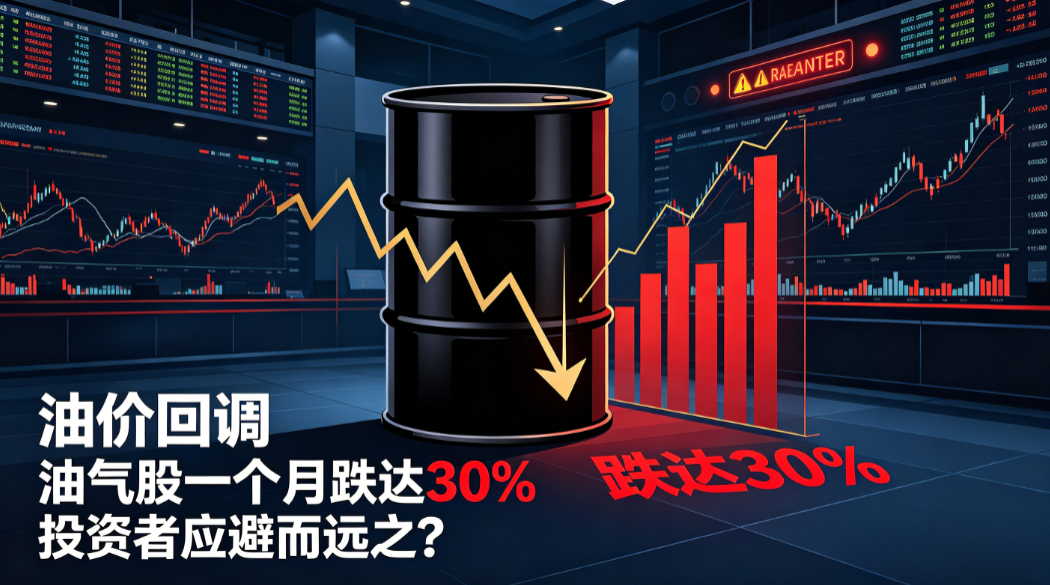
As oil prices shift from a rapid climb to a notable retreat, many Singapore-listed companies linked to the oil and gas sector have come under heavy selling pressure. Over the past month, several counters have fallen by more than 30%, prompting a familiar question among investors: does weaker crude automatically mean oil and gas stocks should be avoided?
The short answer is no. While a lower oil price can weigh on earnings, the impact varies widely depending on where a company sits in the energy value chain. For investors, the challenge is not merely predicting the direction of crude, but understanding which businesses are most exposed to commodity price swings and which can remain resilient even in a softer pricing environment.
Oil Pullback Reflects Improved Sentiment
The recent decline in crude comes as tensions in the Middle East have eased, raising hopes that disruption risks around the Strait of Hormuz may diminish. Brent crude, which had briefly surged above US$100 a barrel in the past two months, fell back to US$72.15 a barrel as of Friday, June 26, 5 p.m., marking a decline of nearly 17% in one month.
This reversal has hit oil-related stocks in Singapore. Hiap Seng Industries, which provides engineering services to the oil, gas and petrochemical sectors, fell 30% over the past month. RH Petrogas declined 21.67%, while ASL Marine and Beng Kuang Marine dropped 17.14% and 15.09% respectively. Rex International also slid 15%.
The sell-off reflects more than just lower crude prices. It also reflects how quickly market sentiment can shift when a geopolitical risk premium is removed from the oil market. During periods of heightened tension, oil prices often rise faster than fundamentals justify. When those fears ease, valuations can fall just as quickly.
Upstream Producers Face the Sharpest Impact
According to FSM Global research and portfolio management analyst Chen Qiuyi, oil price corrections do create short-term pressure on oil and gas stocks, especially for companies directly involved in exploration and production.
“These companies usually sell crude at current market prices, or close to spot prices,” she noted. “When oil prices fall, their revenue is affected.”
This makes upstream players the most vulnerable segment in the sector. Their earnings are closely tied to crude prices, so a drop in Brent can immediately compress margins and reduce profit expectations. For investors, that means names such as Rex International and RH Petrogas are likely to experience more volatility than companies operating in other parts of the energy supply chain.
Chen also pointed out that some of the recent decline should be seen as a normalisation effect. Since oil prices had rallied sharply over the previous two months, part of the fall in oil-related equities may simply represent valuations returning to more sustainable levels.
Different Segments, Different Risks
A key takeaway from the recent market action is that oil and gas is not a single homogeneous sector. As Phillip Securities stockbroker Zhang Juexing observed, each company is affected differently depending on where it operates in the industry chain.
A weaker oil price may reduce revenue and profit margins for upstream producers, but the impact on marine and offshore engineering companies, as well as downstream businesses, tends to be milder. In some cases, lower energy prices can even reduce fuel and operating costs, supporting profitability.
This distinction matters because many investors tend to group all oil-related counters together. In reality, companies that provide infrastructure, marine support, vessel services or engineering work often rely more on contract pricing and project execution than on the daily movement of crude. Their revenue streams can therefore be relatively stable, even when oil prices are volatile.
Zhang stressed that investors should focus on individual business models rather than making a blanket judgment on the sector. That approach is especially important in times like this, when market sentiment can exaggerate the downside.
Selective Opportunities Remain
Despite the recent sell-off, analysts believe some oil and gas related stocks may have already priced in much of the negative news. Chen Qiuyi noted that current oil prices are still above levels seen in most of 2024 and 2025, which suggests the broader environment is not necessarily bearish in absolute terms.
She argued that companies with exposure to infrastructure, marine services and offshore support may be better positioned to weather oil price fluctuations. These firms generally derive income from contract rates rather than spot commodity prices, making earnings more predictable.
This view is supported by recent analyst reports. Lim & Tan Securities reiterated a “Buy” rating on ASL Marine on June 19, with a target price of S$0.47. The broker said the company’s core operations and balance sheet continued to improve in the third quarter of FY2026, and it could turn net cash in FY2027. It also highlighted higher utilisation at the company’s shipyard and a management focus on margin-accretive projects rather than growth at any cost.
Similarly, UOB Kay Hian issued a “Buy” rating on Beng Kuang Marine on June 17, with a target price of S$0.75. The company’s wholly owned subsidiary had secured two procurement contracts worth about S$36.7 million in total, to be completed over the next year. These orders are expected to support revenue and earnings for FY2026 to FY2027.
Conclusion
The recent drop in oil prices has undoubtedly triggered a sharp correction across Singapore-listed oil and gas counters. However, the sell-off should not be interpreted as a reason to avoid the entire sector. The impact of lower crude is uneven: upstream producers are most exposed, while marine, offshore and infrastructure-linked firms may prove more resilient.
For investors, the current environment calls for selectivity rather than blanket caution. Instead of asking whether oil and gas stocks should be shunned, a better question is which companies can sustain earnings, manage costs and capture contracts regardless of commodity swings. In a sector shaped by both geopolitics and fundamentals, that distinction is critical.