Supreme Court Ruling Strengthens the Fed — and May Quietly Benefit Kevin Warsh
Keywords: Federal Reserve, Supreme Court, Lisa Cook, Kevin Warsh, Jerome Powell, Donald Trump, central bank independence, monetary policy, FOMC, political pressure
Introduction
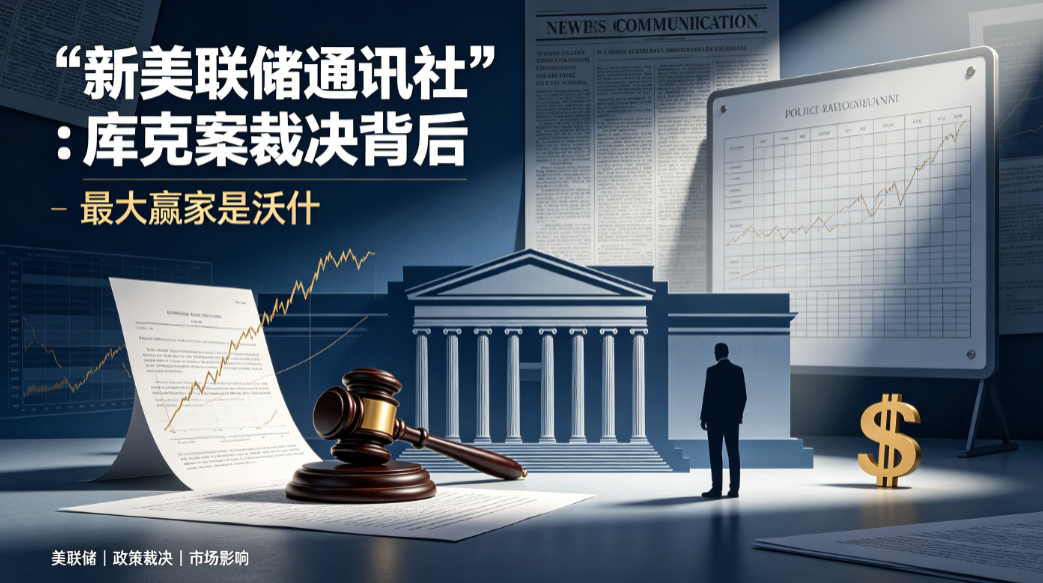
The U.S. Supreme Court’s decision on Monday to block President Donald Trump’s attempt to remove Federal Reserve Governor Lisa Cook was, on its face, a major victory for central bank independence. But according to Nick Timiraos, the closely watched financial journalist often described as the “new Fed whisperer,” the ruling may have an even broader political consequence: it could be the biggest win of all for Kevin Warsh, Trump’s chosen chairman of the Federal Reserve.
Warsh has only recently entered the second month of his term as Fed chair, yet the Court’s ruling has already changed the strategic landscape around him. A question that had hung over the Fed for months — whether a president could dismiss a governor or chair on contested grounds — has now been answered in a way that significantly strengthens the institution’s autonomy.
A Decision That Reinforces Institutional Independence
The Supreme Court’s ruling did not eliminate every possible avenue for White House pressure. Presidents can still criticize the Fed publicly, shape appointments over time, and influence the broader political climate surrounding monetary policy. But the decision did close off the most direct and destabilizing route: removing governors simply to install loyalists who would vote in line with the president’s preferences.
That point matters because the Federal Open Market Committee, which sets interest rates, depends on the independence of its members. If a president could replace dissenting officials with compliant ones, the committee’s deliberations would no longer reflect economic judgment alone. They would become an extension of partisan politics.
The Court’s reasoning also highlighted the Fed’s “unique historical status,” a phrase that underscores why the central bank is treated differently from other independent agencies. In the same day’s decisions, the Court curtailed removal protections for leaders of other agencies, but preserved stronger safeguards for the Fed. That distinction is not merely legal. It reflects the special role the Fed plays in maintaining price stability, employment, and financial confidence.
Why This Helps Warsh
For Warsh, the ruling is valuable because it reduces the risk that the White House could reshape the Fed around him. Trump has never hidden his preference for easier monetary policy. During Jerome Powell’s tenure, he repeatedly pressured the Fed to cut rates and often attacked the central bank for moving too slowly.
If the president could freely remove governors, he could theoretically surround Warsh with officials who support aggressive rate cuts regardless of inflation risks. That would put the chair in an impossible position: either acquiesce to political demands or confront a committee increasingly stacked against him.
As investor Mark Spindel noted, allowing a president to populate the board with political allies would create a cascade of difficult consequences. It would undermine the chair’s ability to run the institution, guide the FOMC, and develop a coherent policy legacy. In other words, independence is not just a theoretical virtue; it is the operational condition that allows the Fed to function.
The ruling also gives Warsh more room to establish credibility in the markets. Investors care not only about what the Fed decides, but about whether its decisions are made free from direct political interference. A chair seen as too closely tethered to the White House risks losing influence, even if he formally holds the top job.
The Political Pressure Is Real
The threat described by Spindel is not hypothetical. History offers a clear warning. In the 1970s, the Nixon administration applied intense pressure on then-Fed Chair Arthur Burns to keep rates low. One of the tools considered was expanding the Fed’s Board of Governors to weaken Burns’s control. The lesson remains relevant: when presidents seek to bend the central bank to their will, they often do so indirectly, through personnel and structure.
That is why the Court’s decision matters. It does not merely protect one governor, Lisa Cook, from a contested firing. It also sends a signal that the highest legal barrier around the Fed still stands. Future presidents will have a harder time threatening the central bank into submission by trying to remove officials on weak or manufactured grounds.
Cook’s own case illustrates the danger. She was accused of misrepresentations related to mortgage applications made before she joined the Fed, allegations she has denied. She argued that the attempt to remove her was based on a “fabricated pretext” because she would not yield to political pressure. The Court’s decision suggests that such a rationale is too fragile to justify undermining the independence of a Fed governor.
Powell’s Presence Still Shapes the Picture
Another factor that may complicate Warsh’s early tenure is Jerome Powell’s decision to remain on the Board of Governors after stepping down as chair. That choice is unusual, but it effectively blocks the White House from filling the vacancy with a more pliant candidate.
Powell’s continued presence means Warsh cannot rely on a reshaped board to consolidate his authority. At the same time, it prevents Trump from installing another rate-cut advocate who could push the Fed further toward politically driven easing. In that sense, Powell’s move may reduce Warsh’s visibility, but it also protects his institution from being pulled in a more extreme direction.
This is especially important because the policy environment is becoming more difficult. Fed officials are now debating whether stronger growth and stickier inflation might require rate increases later this year, not the cuts Trump favors. That makes the central bank’s independence even more consequential: decisions will need to reflect data, not political impatience.
Conclusion
The Supreme Court’s ruling in favor of Lisa Cook is a landmark victory for Federal Reserve independence. Yet its deeper significance may lie in the freedom it gives Kevin Warsh to lead without the constant threat of direct political manipulation. By reinforcing the Fed’s removal protections, the Court has made it harder for any president to stack the board, intimidate governors, or force policy through personnel pressure.
For Warsh, that is more than a legal safeguard. It is the foundation for credible leadership. In an era when monetary policy is once again at the center of political debate, the Fed’s ability to remain independent may prove as important as any rate decision it makes.