Mixed Signals Across Global Markets as Tech Rotation, Commodity Moves, and Macro Uncertainty Shape Trading
Keywords: U.S. stocks, European equities, gold rally, oil prices, technology stocks, semiconductors, market outlook, investor sentiment
Introduction
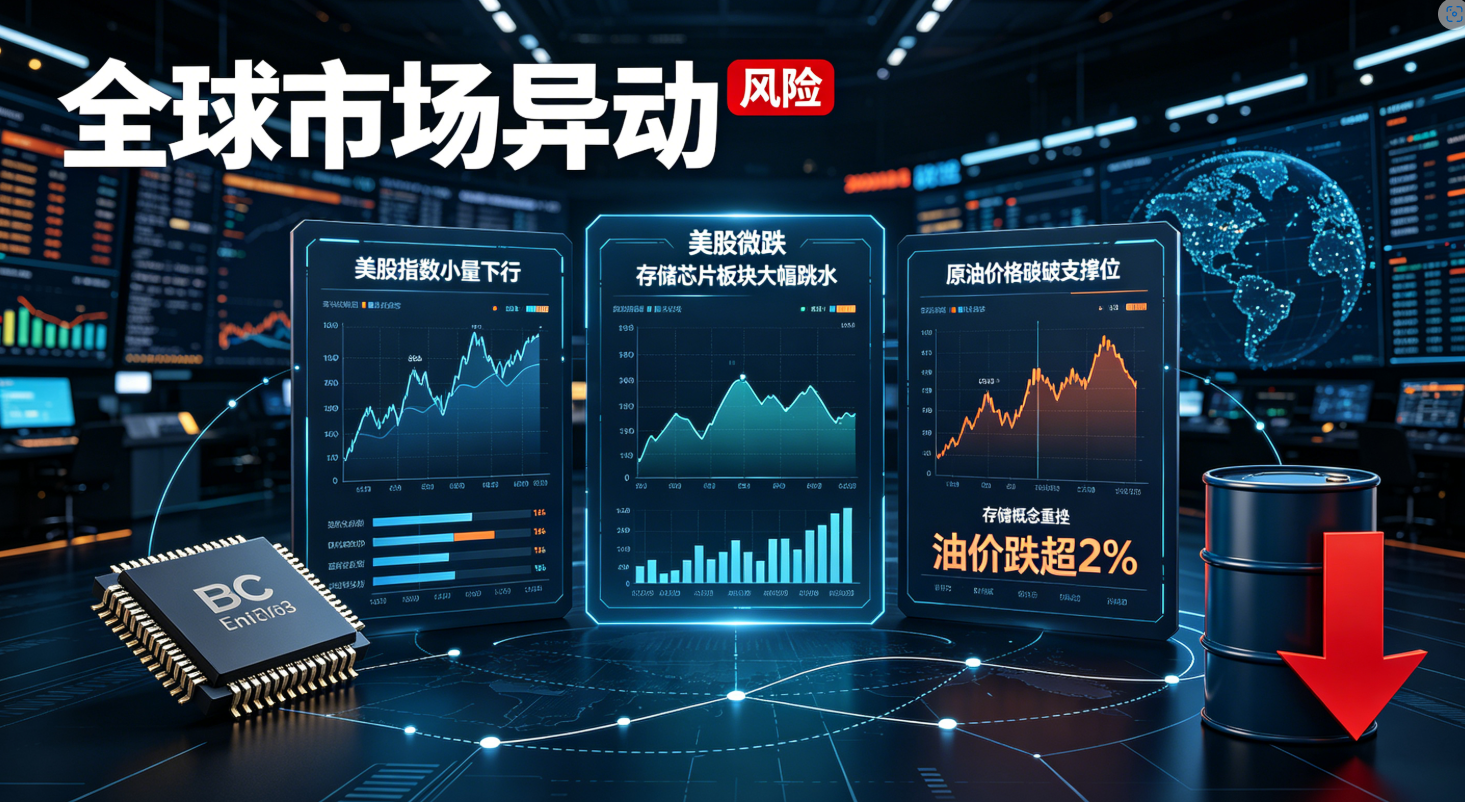
Global financial markets ended the June 26 session with a distinctly mixed tone, reflecting a market environment shaped by divergent sector performance, shifting expectations around inflation, and continued uncertainty over corporate cost pressures. In the United States, the three major stock indexes closed lower, although the declines were modest on the surface. Beneath the headline numbers, however, there was a more meaningful rotation underway: some technology and healthcare names advanced sharply, while semiconductor-related stocks and storage-device makers experienced heavy selling. European equities also weakened broadly, while commodity markets told a more nuanced story, with oil falling on demand concerns and precious metals climbing strongly on safe-haven demand and inflation hedging.
Taken together, the session offered a clear reminder that investors remain highly sensitive to both earnings developments and macroeconomic signals. As valuation pressure, supply-chain cost inflation, and sector-specific corporate actions continue to influence pricing, market leadership is becoming increasingly selective rather than broad-based.
U.S. Market: A Mild Index Decline, but Strong Sector Dispersion
The U.S. equity market finished the day lower across all three major benchmarks. The Dow Jones Industrial Average fell 44.51 points, or 0.09%, to 51,876.11. The S&P 500 lost 3.47 points, or 0.05%, to 7,354.02. The Nasdaq Composite declined 60.98 points, or 0.24%, ending at 25,297.62. On a weekly basis, the Dow managed a 0.60% gain, while the Nasdaq dropped 4.60% and the S&P 500 fell 1.95%.
Although the index moves were relatively small, the underlying market action was far from calm. The heaviest pressure came from storage-related companies, which suffered steep declines. Western Digital tumbled 13.17%, Seagate Technology lost 12.24%, SanDisk dropped 10.46%, and Micron Technology fell 6.69%. This weakness suggests growing investor concern about margins and pricing power in memory and storage markets, especially if component costs continue to rise while demand remains uneven.
The semiconductor sector more broadly also faced pressure. Onsemi plunged nearly 24% after announcing a planned all-stock acquisition of Synaptics in a deal valued at approximately $7 billion. The market’s reaction indicates that investors are not yet convinced the transaction will create near-term value, particularly if share dilution and integration risks outweigh the expected strategic benefits. In the current environment, deals funded by equity can be punished if they are perceived as expensive or if they occur at a time when the market is already wary of cyclicality in chip-related businesses.
Big Tech: Leadership Becomes More Selective
Within large-cap technology, performance diverged sharply. Microsoft rose 5.71%, Amazon gained 2.5%, Meta Platforms advanced 1.36%, and Tesla climbed 1.22%. In contrast, Nvidia fell 1.64%, while Alphabet A shares slipped 1.84%. This pattern is notable because it shows that even in a market where technology remains central, leadership is no longer uniform.
Microsoft’s strong move may reflect continued confidence in its enterprise software, cloud, and AI ecosystem, while Amazon’s gain underscores resilience in both e-commerce efficiency and cloud services. Meta’s steady rise suggests investors continue to reward disciplined capital allocation and advertising strength. Tesla’s advance, meanwhile, may indicate that traders are still willing to look through short-term volatility and focus on longer-term product and autonomy narratives.
By contrast, Nvidia’s decline highlights how high expectations can make even the strongest market franchises vulnerable to profit-taking. Alphabet’s weakness may reflect a broader reassessment of digital advertising growth and competitive pressures in the AI search landscape. Overall, the day’s trading suggests that investors are no longer buying “big tech” as a monolithic theme. Instead, capital is rotating into names with either stronger near-term catalysts or more defensible earnings visibility.
Corporate News Drives Sharp Stock Reactions
Several individual corporate developments created notable price swings. Apple shares rose 3.14%, partially recovering from the prior session’s decline. The rebound came after Apple announced price increases for its iPad and MacBook products, citing a significant rise in storage and memory chip costs. This move is strategically important: it shows that Apple is attempting to preserve margins by passing higher input costs on to consumers. The market appears to have interpreted the pricing action as evidence of strong brand power and pricing discipline rather than as a sign of weakness.
Moderna surged 12.59% to its highest level since 2024. The company’s investor day and presentation of progress across its research pipeline were received positively by the market. This kind of reaction reflects the importance of pipeline credibility in biotech: when investors see concrete development milestones and a clearer path to future product candidates, valuation support can improve quickly. Moderna’s rally also shows that healthcare can still attract capital when the narrative shifts from pandemic-era volatility to longer-term innovation potential.
SpaceX edged up 0.15% as the company approaches inclusion in the FTSE Russell index. Passive fund demand ahead of index entry can be a meaningful tailwind, since index-tracking vehicles may need to accumulate shares in advance. While the move was modest, it illustrates how market structure factors can influence pricing even in the absence of major operating news.
China-Related Stocks Show Relative Strength
The Nasdaq Golden Dragon China Index rose 0.7%, outperforming several other risk assets in the session. Among major Chinese ADRs, NetEase gained 7.74%, Pinduoduo rose 4.43%, New Oriental climbed 4.28%, and NIO advanced 2.75%. Alibaba slipped 0.27%, while ASE Technology fell 3.92%.
The broad tone among Chinese equities was relatively constructive, suggesting that investors remain willing to selectively engage with China-linked names when company fundamentals or sentiment catalysts improve. NetEase and Pinduoduo in particular benefited from strong buying interest, possibly reflecting expectations around business resilience and cash flow generation. New Oriental’s move points to continued confidence in its transformation and education-related business recovery, while NIO’s gain indicates that EV names can still attract speculative flows when risk appetite improves.
Still, the performance gap within the group shows that investors are not treating Chinese equities as a single trade. Instead, stock selection continues to matter, especially amid varying views on consumer demand, regulatory conditions, and growth durability.
European Markets: Broad Weakness Reflects Caution
European equities closed lower across the board. The UK’s FTSE 100 declined 21.87 points, or 0.21%, to 10,508.02. France’s CAC 40 fell 46.74 points, or 0.55%, to 8,384.87. Germany’s DAX posted the steepest loss among the major indices, dropping 323.61 points, or 1.29%, to 24,671.22.
The weakness in Europe suggests that global investors remain cautious about the region’s growth outlook and its sensitivity to industrial and energy trends. Germany’s sharper decline may reflect concern over export exposure, manufacturing softness, and broader risk aversion in cyclical sectors. While the UK market held up somewhat better, the overall direction was clearly negative, reinforcing the view that equity sentiment remained fragile outside the United States.
Commodities: Oil Softens, Precious Metals Strengthen
Commodity markets delivered one of the clearest contrasts of the day. WTI crude oil fell $1.68, or 2.34%, to $70.24 per barrel. The decline may reflect renewed demand concerns or profit-taking after recent fluctuations in energy markets. When oil retreats while equities are mixed, it often signals that traders are reassessing the strength of global industrial and transportation demand.
By contrast, precious metals surged. COMEX gold futures for the nearest contract rose $55.40, or 1.37%, to $4,103.0 per ounce. Silver futures increased $0.80, or 1.37%, to $59.16 per ounce. Spot gold climbed $63.48, or 1.58%, to $4,090.26 per ounce, while spot silver jumped $1.29, or 2.23%, to $59.19 per ounce.
The strength in gold and silver underscores persistent demand for defensive assets. Investors may be seeking protection against macro uncertainty, inflation risk, and potential real-rate volatility. The move also suggests that precious metals are increasingly being viewed not only as safe havens, but also as strategic stores of value in an environment where policy expectations and cost pressures remain unsettled. Silver’s particularly strong performance may additionally reflect its dual role as both a precious and industrial metal.
Conclusion
The June 26 market session was defined less by broad index movement and more by sharp cross-asset and cross-sector differentiation. U.S. equities slipped modestly, but the real story was the growing divide between resilient large-cap tech leaders, sharply punished storage and semiconductor names, and select companies benefiting from catalysts such as product pricing power, investor-day optimism, or index inclusion. European stocks weakened broadly, signaling continued caution in global risk sentiment. Meanwhile, commodity markets highlighted a classic defensive rotation: oil fell on demand concerns, while gold and silver rallied strongly on uncertainty and inflation hedging.
For investors, the key takeaway is that market leadership remains highly selective. In such an environment, careful attention to earnings quality, cost structure, balance-sheet strength, and company-specific catalysts is likely to matter more than broad thematic exposure. As volatility persists across equities and commodities alike, disciplined stock selection and risk management remain essential.